Welding automation
Robotic Arc / MIG Welding
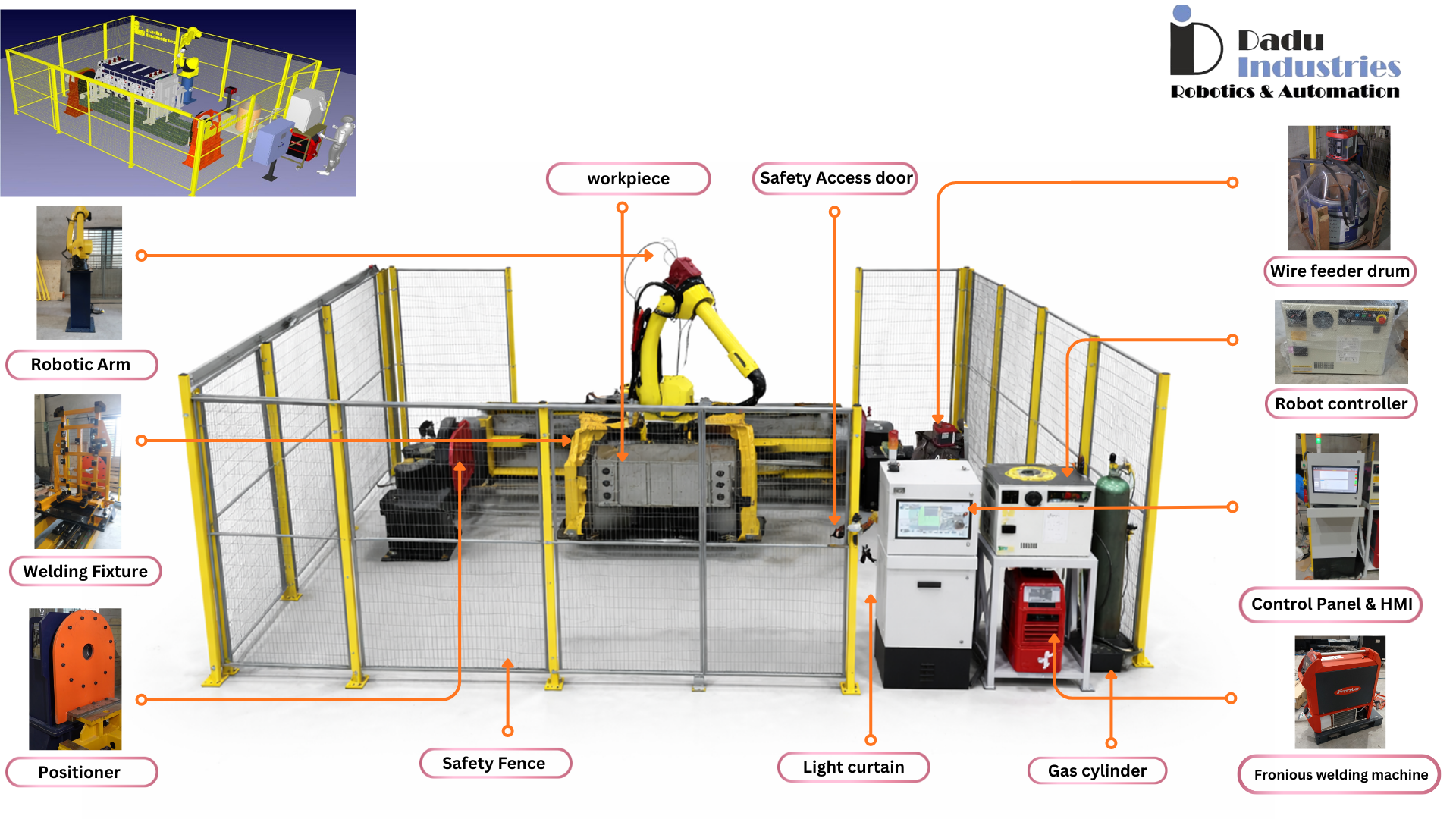
Robotic Welding fixtures & Welding positioners. Manual welding jigs and fixtures. MIG/TIG welding of automotive, general engineering & structural components. Experience with touch…
What it is
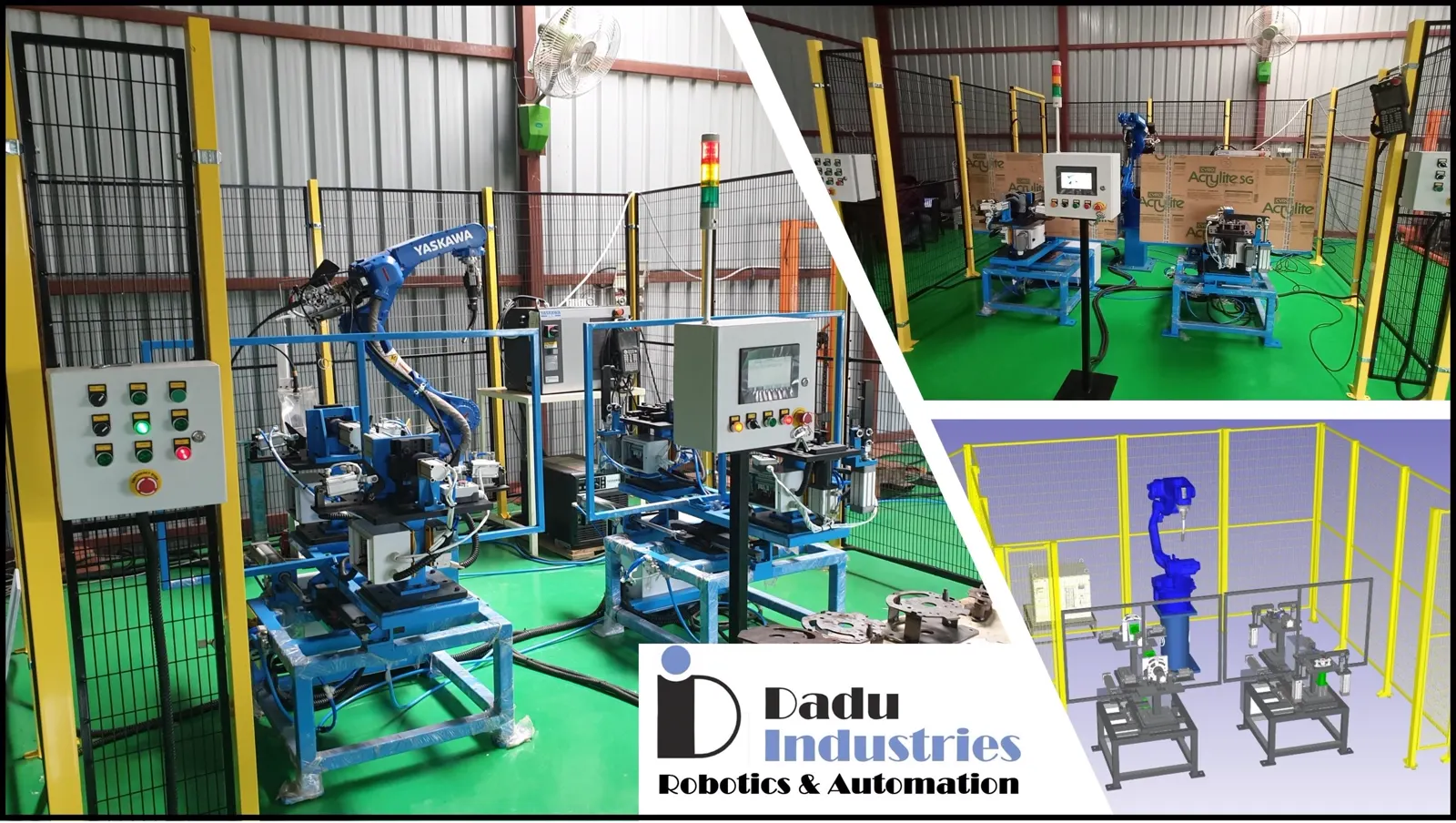
Robotic Welding fixtures & Welding positioners. Manual welding jigs and fixtures. MIG/TIG welding of automotive, general engineering & structural components. Experience with touch sensing and seam tracking jobs. DI provides turnkey solutions in Robotic Welding (MIG, TIG) and complete production lines for:
Pedal box, rear & front suspension, lower control arm, chassis, 2W downtube chassis, tipper body and other various underbody, automotive and engineering components.
How we engineer it
Basic Principle
- Arc Welding: A process of joining metals using the heat generated from an electric arc between a welding electrode and the workpiece.
- Robotic Integration: Utilizing industrial robots equipped with welding tools to automate the arc welding process.
Key Components
- Robotic Arm: A programmable, multi-axis arm that provides high precision and flexibility in movement. It holds and maneuvers the welding torch.
- Welding Torch: The tool attached to the robotic arm that generates the arc for welding. It can be equipped for different types of arc welding, like MIG (Metal Inert Gas), TIG (Tungsten Inert Gas), or stick welding.
- Power Supply: Provides the necessary electrical power for creating the arc.
- Control System: Advanced software that programs the robot’s movements and welding parameters (like arc voltage, current, and speed).
Challenges and Considerations
- Initial Investment: High cost associated with the purchase and setup of robotic welding systems.
- Technical Expertise: Requires skilled operators and technicians for programming, maintenance, and oversight.
- Integration: Needs to be seamlessly integrated into existing production lines or systems.
What you get out of it
Enhanced Precision and Quality
Robots provide uniform welds, ensuring high-quality results with minimal defects. The precision of robotic arms allows for accurate welding, crucial for complex or delicate tasks.
Increased Productivity and Efficiency
Robots can operate continuously without fatigue, significantly increasing production rates. Automated welding processes are generally faster than manual welding, reducing the time taken to complete each task.
Flexibility and Versatility
Robotic welding systems can be programmed for a range of different welding tasks and materials. They can be reprogrammed for different projects, making them versatile for various production needs.
Easily Scalable
As production demands increase, additional robots can be added to scale up the operations effectively
Related solutions