
Positioning & manipulators
Rotators
Robotic welding with Special Purpose Machine (SPM) Rotators represents a sophisticated integration of robotics and specialized equipment in industrial manufacturing, particularly in…
What it is
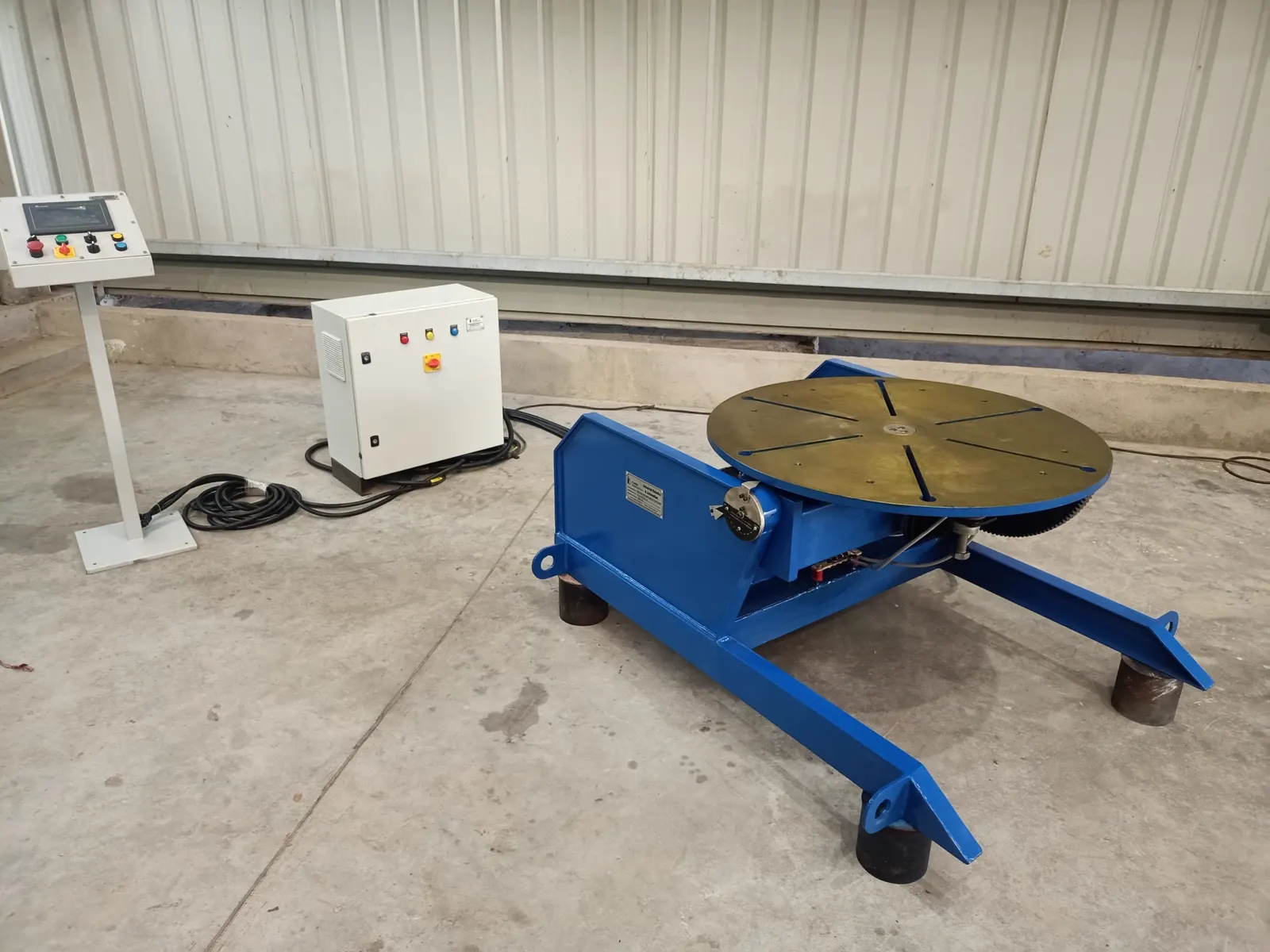
Robotic welding with Special Purpose Machine (SPM) Rotators represents a sophisticated integration of robotics and specialized equipment in industrial manufacturing, particularly in welding applications. This system combines the precision and programmability of robotic arms with the functionality of SPM Rotators to enhance the welding process, especially for large or complex components. Robotic welding with SPM Rotators represents an advanced manufacturing solution, bringing together the best of robotic precision and the functionality of specialized rotating machinery. This combination is pivotal in industries where high-quality, efficient, and safe welding of large or unwieldy components is essential.
How we engineer it
Challenges and Considerations
- Initial Investment: High cost for setting up and integrating both robotic arms and SPM Rotators.
- Technical Expertise: Requires skilled technicians for programming, operation, and maintenance.
- Space Requirements: Both robots and rotators may require significant space within a manufacturing facility.
Key Components
- Robotic Arms: Programmable arms capable of executing complex welding maneuvers with high precision.
- Welding Tools: These could include MIG (Metal Inert Gas), TIG (Tungsten Inert Gas), or other welding torches attached to the robotic arms.
- SPM Rotators: Mechanically engineered to rotate workpieces for optimal welding positioning. They can handle various sizes and weights, providing uniform rotation speed and stability.
- Control System: Advanced software for programming and synchronizing the movements of both the robotic arms and the SPM Rotators.
What you get out of it
Optimized Welding Conditions
Ensures the welding torch is consistently held at the optimal angle and distance, improving weld quality and reducing defects.
Reduced Labor Costs
Automation of complex tasks reduces reliance on skilled welders for repetitive jobs.
Improved Safety
Reduces the need for manual handling of large or heavy components, minimizing the risk of workplace injuries.
Increased Productivity
Automates complex welding tasks, enabling faster production rates with consistent output.
Related solutions
Enquiry